
When working on construction projects, timing and material quality are critical. Many contractors now prefer Concrete Truck Mix On Site solutions because they allow fresh concrete to be produced exactly where it is needed.
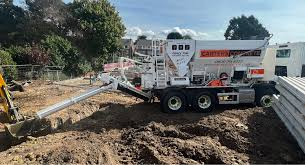
Instead of delivering pre-mixed concrete from a plant, specialized trucks mix the materials directly at the job site. This approach helps reduce waste, improve quality, and ensure the concrete is poured at the right consistency.
Read too: Top Trucking Companies That Still Have Manual Transmissions
What Is Concrete Truck Mix On Site?
Concrete Truck Mix On Site refers to a process where concrete is mixed directly at the construction site using a specialized truck known as a volumetric concrete mixer.
Unlike traditional ready-mix trucks, which transport pre-mixed concrete from a batching plant, on-site mixing trucks carry raw ingredients separately.
These ingredients typically include:
- cement
- sand
- gravel (aggregate)
- water
- admixtures
The materials are blended together only when the operator begins pouring concrete at the job site.
Concrete itself is one of the most widely used construction materials in the world. You can learn more about it here:
https://en.wikipedia.org/wiki/Concrete
How Does a Concrete Truck Mix On Site Work?
A Concrete Truck Mix On Site system uses a volumetric mixing process.
The truck contains separate compartments for each ingredient. A conveyor system moves the materials into a mixing chamber where they combine to produce fresh concrete.
Key Components of an On-Site Mixing Truck
| Component | Function |
|---|---|
| Cement hopper | Stores cement powder |
| Aggregate bins | Holds sand and gravel |
| Water tank | Supplies water for mixing |
| Conveyor system | Feeds materials into mixer |
| Mixing auger | Blends materials into concrete |
Because the operator controls the mix ratio, the concrete can be customized based on the project requirements.
Why Contractors Use Concrete Truck Mix On Site
Many contractors prefer this method because it offers several practical advantages.
Fresh Concrete Every Time
Concrete begins to harden quickly once mixed. With on-site mixing, the concrete is produced only when needed, ensuring maximum freshness.
Reduced Material Waste
Traditional ready-mix deliveries often result in leftover concrete that must be discarded.
With Concrete Truck Mix On Site, operators mix only the amount required.
Flexible Mix Designs
Different parts of a project may require different concrete strengths.
On-site mixing allows operators to adjust:
- cement content
- water ratio
- additives
This flexibility is extremely useful for complex construction projects.
Typical Concrete Mix Ratios Used On Site
Concrete strength depends on the mix ratio of ingredients.
Below is a common example.
| Ingredient | Quantity |
|---|---|
| Cement | 1 part |
| Sand | 2 parts |
| Gravel | 3 parts |
| Water | 0.5 parts |
This ratio produces a general-purpose concrete mix suitable for many projects.
For structural applications, engineers may require higher-strength mixtures.
Types of Projects Using On-Site Concrete Mixing
The Concrete Truck Mix On Site approach is used in many construction environments.
Residential Construction
Common residential uses include:
- driveways
- patios
- sidewalks
- garage floors
Commercial Construction
Commercial projects often require large volumes of concrete.
Examples include:
- warehouses
- parking lots
- office buildings
- retail centers
Infrastructure Projects
Large-scale infrastructure projects frequently rely on on-site mixing.
Examples:
- bridges
- highways
- airport runways
Average Cost of Concrete Truck Mix On Site
The cost of on-site concrete mixing depends on several factors.
These include:
- location
- project size
- concrete strength
- delivery distance
Below is a general estimate.
| Service Type | Average Cost |
|---|---|
| Basic concrete | $120 – $150 per cubic yard |
| High-strength concrete | $150 – $200 per cubic yard |
| Specialty mixes | $200+ per cubic yard |
Additional charges may apply for:
- short loads
- extended delivery time
- pumping services
Step-by-Step: How Concrete Is Mixed On Site
The Concrete Truck Mix On Site process follows several steps.
Step 1: Truck Arrives at the Job Site
The volumetric mixer truck delivers raw materials to the location.
Typical truck capacity:
- 8–10 cubic yards of concrete
Step 2: Operator Sets Mix Design
The operator selects the desired concrete mix.
For example:
- cement: 350 kg per cubic meter
- water ratio: 0.45
This determines the strength and consistency.
Step 3: Materials Enter the Mixing Auger
The conveyor moves materials into the mixing chamber.
Water is added automatically.
Step 4: Fresh Concrete Is Produced
The auger mixes the ingredients continuously as the concrete is discharged.
Because mixing happens immediately before pouring, the concrete remains highly workable.
Step 5: Concrete Is Poured
The concrete is poured into:
- forms
- foundations
- slabs
Contractors then finish the surface using standard tools.
Advantages vs Disadvantages of On-Site Mixing
Advantages
Fresh concrete
Concrete is mixed only when needed.
Reduced waste
Only the required volume is produced.
Flexible mix designs
Different strengths can be produced during the same job.
Improved scheduling
No risk of concrete hardening during transport.
Disadvantages
Higher equipment cost
Volumetric mixer trucks are more expensive than traditional mixers.
Operator skill required
Incorrect mix ratios can affect concrete strength.
On-Site Mixing vs Ready-Mix Concrete
Here is a comparison between the two methods.
| Feature | On-Site Mixing | Ready-Mix Concrete |
|---|---|---|
| Mixing location | Job site | Concrete plant |
| Freshness | Very high | Limited transport time |
| Waste | Minimal | Possible leftover |
| Flexibility | High | Limited |
Both methods are widely used depending on project needs.
Tips for Getting the Best Concrete Quality
Whether you are a contractor or homeowner, follow these tips.
1. Check the Water Ratio
Too much water weakens concrete strength.
Most mixes use a water-to-cement ratio of 0.40–0.50.
2. Monitor Weather Conditions
Extreme temperatures affect curing.
Ideal pouring temperature:
- 50°F to 85°F
3. Use Quality Aggregates
Clean aggregates improve concrete durability.
Avoid materials with:
- excessive dust
- organic debris
4. Cure the Concrete Properly
Concrete should cure slowly to reach maximum strength.
Common curing methods include:
- water spraying
- curing blankets
- sealing compounds
FAQ About Concrete Truck Mix On Site
What is a concrete truck mix on site?
It is a method where concrete is mixed directly at the construction site using a volumetric mixing truck.
Is on-site concrete mixing better than ready-mix?
It depends on the project. On-site mixing offers flexibility and reduced waste, while ready-mix may be better for large continuous pours.
How much concrete can a mixing truck produce?
Most trucks can produce 8 to 10 cubic yards of concrete.
Is on-site concrete mixing more expensive?
In some cases it may cost slightly more, but reduced waste can offset the additional expense.
What types of projects use on-site mixing?
Common projects include driveways, foundations, commercial buildings, and infrastructure construction.
How long does concrete take to set?
Concrete usually begins to set within 30 to 90 minutes and reaches full strength in about 28 days.
Conclusion
Concrete Truck Mix On Site technology has transformed the way contractors deliver concrete to construction projects. By mixing concrete directly at the job site, builders gain greater control over material quality, reduce waste, and improve scheduling flexibility.
Whether you’re working on a residential driveway, commercial building, or large infrastructure project, on-site concrete mixing can provide fresher materials and better project efficiency.
If you found this guide helpful, consider sharing it on social media so other builders and contractors can learn more about on-site concrete mixing solutions.
Leave a Reply