
Delays, wasted material, and inconsistent concrete quality are common headaches on construction sites. A Mix On Site Concrete Truck solves these problems by producing fresh concrete right where and when it’s needed. In this guide, you’ll learn how it works, when to use it, and why many U.S. contractors are switching to on-site mixing for better control and lower costs.
What Is a Mix On Site Concrete Truck?
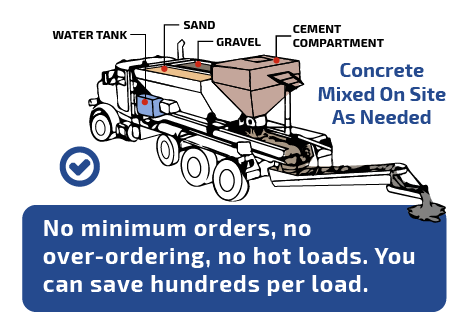
A Mix On Site Concrete Truck—often called a volumetric concrete mixer—is a mobile batching system that carries raw materials (cement, aggregates, water, admixtures) in separate compartments and mixes them on demand at the jobsite.
Read too: Top Trucking Companies That Still Have Manual Transmissions
Unlike traditional ready-mix trucks that deliver pre-mixed concrete with a limited working time, on-site mixers let operators adjust the mix in real time. This ensures consistent quality, minimizes waste, and supports variable pours throughout the day.
Authoritative reference: The concept and mechanics of volumetric mixing are summarized by Wikipedia, which explains how on-site batching produces fresh concrete with precise proportions.
How Does a Mix On Site Concrete Truck Work?
Understanding the process helps you decide if this solution fits your project.
Step-by-Step Mixing Process
- Material Loading
Cement, sand, stone, and water are loaded into separate bins at the plant. - On-Site Calibration
The operator calibrates proportions based on the required PSI/MPa and slump. - Continuous Mixing
Materials feed into an auger or mixing chamber and blend continuously. - Real-Time Adjustment
Water or admixtures can be adjusted instantly to match weather or specs. - Immediate Placement
Fresh concrete is discharged directly into forms—no waiting.
Concrete tip: For consistent workability, many operators target 22–28°C (72–82°F) mixing temperature and add water incrementally (e.g., 0.5–1.0 gallon per cubic yard as needed).
Why Choose a Mix On Site Concrete Truck?
Contractors increasingly prefer on-site mixing because it addresses common pain points.
Key Benefits
- Freshness on demand: No premature setting during transit.
- Zero over-ordering: Produce exactly the volume required.
- Flexible scheduling: Pour in phases without reordering trucks.
- Quality control: Adjust slump and strength instantly.
- Lower waste: Less leftover concrete means reduced disposal costs.
Benefits vs. Limitations
| Aspect | Advantages | Limitations |
|---|---|---|
| Timing | Mix anytime, no rush | Requires trained operator |
| Quality | Consistent, adjustable | Calibration must be precise |
| Cost | Less waste, fewer returns | Higher upfront equipment cost |
| Logistics | Ideal for remote sites | Slightly slower per-yard output |
When Is a Mix On Site Concrete Truck the Best Choice?
This solution shines in specific scenarios:
- Small to medium pours with variable quantities
- Remote or urban sites with tight access
- Projects needing multiple mix designs in one day
- Repairs and utility work where timing is unpredictable
Case insight: Municipal utility crews in the U.S. report 15–25% material savings when switching to volumetric mixers for patching and curb repairs due to reduced over-ordering.
How Does It Compare to Ready-Mix Concrete Trucks?
Both options have their place. Here’s a practical comparison:
| Feature | Mix On Site Truck | Ready-Mix Truck |
|---|---|---|
| Mixing location | At the jobsite | At the plant |
| Waste | Minimal | Common if over-ordered |
| Time window | Flexible | Limited set time |
| Large pours | Moderate efficiency | High efficiency |
| Customization | Instant | Pre-set |
Bottom line: For large continuous pours, ready-mix may be faster. For precision, flexibility, and waste reduction, on-site mixing wins.
Cost Considerations: Is It Worth the Investment?
Costs vary by region and provider, but decision-makers typically evaluate:
- Per-yard price: Often competitive due to zero waste
- Labor savings: Fewer crew interruptions
- Schedule reliability: Less downtime waiting for deliveries
Industry estimates suggest that projects under 100 cubic yards often see the highest ROI with on-site mixing due to reduced waste and change-order flexibility.
Environmental Impact and Sustainability
Sustainability is no longer optional. Mix on site trucks help by:
- Reducing returned concrete (a major landfill contributor)
- Lowering fuel use from fewer truck trips
- Supporting low-cement or specialty mixes on demand
These advantages align well with LEED goals and municipal sustainability requirements.
Safety and Quality Control Best Practices
To maximize results:
- Train operators on calibration and maintenance
- Verify material moisture daily for accuracy
- Document mix designs for compliance
- Inspect augers and bins before each shift
Consistent procedures ensure repeatable strength and slump across pours.
Frequently Asked Questions (FAQ)
What is the difference between a volumetric mixer and a ready-mix truck?
A volumetric mixer (mix on site truck) batches concrete at the jobsite from raw materials, while ready-mix trucks deliver pre-mixed concrete from a plant with limited working time.
Is on-site mixed concrete as strong as ready-mix?
Yes. When properly calibrated, on-site mixed concrete meets or exceeds specified strength because it’s placed fresh without transit delays.
How much concrete can a mix on site truck produce?
Most units produce up to 10–12 cubic yards per hour, depending on mix design and operator experience.
Does it cost more to use a mix on site concrete truck?
Upfront rates may appear higher, but reduced waste and flexibility often make total project costs lower—especially for small or variable pours.
Can the mix be changed during the pour?
Absolutely. Operators can adjust water, admixtures, and proportions in real time to meet changing conditions.
Conclusion
A Mix On Site Concrete Truck delivers fresh, customizable concrete with minimal waste—making it a smart choice for contractors who value flexibility, quality, and efficiency. Whether you’re managing repairs, phased pours, or remote jobsites, on-site mixing can simplify operations and protect your budget.
If you found this guide helpful, share it with your team or on social media to help others build smarter and faster.
Leave a Reply