
Waiting for ready-mix concrete or dealing with excess waste can slow down construction projects and increase costs. That’s why many contractors and project managers are turning to On Site Concrete Mixing Trucks as a smarter alternative.
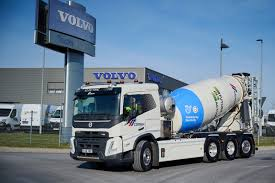
In this guide, you’ll learn how on-site concrete mixing trucks work, when to use them, and why they’re becoming increasingly popular across the US construction industry.
Read too: Top Trucking Companies That Still Have Manual Transmissions
What Are On Site Concrete Mixing Trucks?
On Site Concrete Mixing Trucks are specialized vehicles that carry raw concrete materials—cement, aggregates, water, and additives—and mix them directly at the job site. Unlike traditional ready-mix trucks, the concrete is produced only when and where it’s needed.
Key Difference From Traditional Concrete Trucks
- Traditional trucks: Concrete mixed at a batch plant
- On-site trucks: Concrete mixed on demand at the site
This approach ensures maximum freshness and consistency, especially for projects with variable volume requirements.
How Do On Site Concrete Mixing Trucks Work?
Understanding how these trucks operate helps explain their efficiency.
Step-by-Step Mixing Process
- Raw Materials Loaded Separately
Cement, sand, gravel, and admixtures are stored in individual compartments. - Computer-Controlled Proportions
The operator selects the mix design using onboard controls. - Water Added Gradually
Water is added at precise ratios (for example, 160–200 liters per cubic yard). - Mixing Happens On Demand
Materials are mixed in a continuous auger or drum as concrete is discharged. - Immediate Placement
Concrete is poured directly where needed, with no waiting time.
This method eliminates the risk of premature curing during transport.
Why Are On Site Concrete Mixing Trucks Gaining Popularity?
Industry Insight
According to construction efficiency studies, material waste can account for up to 10% of concrete costs on small-to-mid projects. On-site mixing significantly reduces this issue.
Contractors increasingly prefer flexible solutions that adapt to changing site conditions, and on-site concrete mixing trucks do exactly that.
Main Benefits of On Site Concrete Mixing Trucks
1. Fresh Concrete Every Time
Concrete is mixed seconds before placement, resulting in better strength and workability.
2. Reduced Material Waste
Only the required amount is mixed, minimizing leftover concrete.
3. Flexible Volume Control
Pour 0.5 cubic yards or 10 cubic yards without penalty.
4. Faster Project Completion
No delays from missed deliveries or traffic-related issues.
5. Cost Efficiency
Lower waste, fewer rejected loads, and reduced labor downtime.
On Site Concrete Mixing Trucks vs Ready-Mix Trucks
Comparison Table
| Feature | On Site Mixing Trucks | Ready-Mix Trucks |
|---|---|---|
| Mixing Location | At job site | Batch plant |
| Concrete Freshness | Very high | Variable |
| Waste | Minimal | Moderate to high |
| Volume Flexibility | Excellent | Limited |
| Waiting Time | None | Common |
| Ideal Project Size | Small to medium | Medium to large |
What Types of Projects Use On Site Concrete Mixing Trucks?
These trucks are especially useful for projects where precision and timing matter.
Common Applications
- Residential driveways
- Sidewalks and curbs
- Small commercial foundations
- Utility repairs
- Fence posts and footings
- Remote or hard-to-access sites
They’re ideal when exact quantities are difficult to estimate in advance.
Are On Site Concrete Mixing Trucks Environmentally Friendly?
Yes, in several ways.
Environmental Advantages
- Less wasted concrete means fewer landfill deposits
- Reduced return loads lower fuel consumption
- On-demand mixing minimizes overproduction
This aligns well with sustainability goals increasingly required in modern construction projects.
How Accurate Are the Mix Designs?
Modern on-site mixing trucks use computerized batching systems. These systems ensure consistent ratios for cement, aggregates, and water, resulting in reliable compressive strength.
Many units can store multiple mix designs, allowing operators to switch between specifications instantly.
What About Concrete Quality and Strength?
Concrete quality depends on:
- Accurate batching
- Proper water-to-cement ratio
- Timely placement
On-site mixing excels in all three areas. Industry data shows that freshly mixed concrete can achieve up to 10–15% better early strength compared to delayed ready-mix pours under similar conditions.
Limitations of On Site Concrete Mixing Trucks
No solution is perfect. It’s important to understand the drawbacks.
Potential Downsides
- Higher upfront service cost per cubic yard
- Limited output for very large pours
- Requires skilled operator
However, for many projects, these limitations are outweighed by efficiency gains.
How Much Concrete Can an On Site Mixing Truck Produce?
Typical capacity ranges from:
- 8 to 12 cubic yards of raw material
Because concrete is mixed continuously, operators can stop and restart without compromising quality.
What Should You Prepare Before the Truck Arrives?
Site Preparation Checklist
- Clear access for truck entry
- Stable ground for parking
- Forms fully set and reinforced
- Tools and labor ready
Preparation ensures smooth, uninterrupted pouring.
Safety Considerations When Using On Site Concrete Mixing Trucks
Key Safety Tips
- Maintain clear communication with the operator
- Wear PPE (gloves, eye protection, boots)
- Keep hands away from mixing auger
- Avoid standing directly under discharge chute
Safety protocols are similar to traditional concrete delivery but require attention to moving mixing components.
How Do These Trucks Support E-E-A-T Principles?
From an SEO and content authority perspective:
- Experience: Used by professionals across construction sectors
- Expertise: Backed by engineering-tested mix designs
- Authoritativeness: Widely adopted by commercial contractors
- Trustworthiness: Reduces errors and material waste
This makes them a trusted solution in modern construction workflows.
Real-World Example: Small Commercial Project
A retail pad foundation requiring 7.5 cubic yards of concrete used an on-site mixing truck. The contractor:
- Avoided paying for an 8-yard minimum
- Eliminated leftover waste
- Completed the pour 45 minutes faster
The result was lower cost and improved scheduling efficiency.
FAQ: On Site Concrete Mixing Trucks
Q1: What are on site concrete mixing trucks?
They are trucks that carry raw materials and mix concrete directly at the job site as needed.
Q2: Are on site concrete mixing trucks better than ready-mix?
For small to medium projects requiring flexibility and freshness, yes.
Q3: Is the concrete quality as strong as ready-mix?
Yes. In many cases, freshly mixed concrete performs better due to reduced setting time.
Q4: Do these trucks cost more?
Per-yard pricing may be slightly higher, but overall project costs are often lower due to reduced waste.
Q5: Can they handle specialty mixes?
Yes. Many trucks can produce fiber-reinforced, high-strength, or fast-setting mixes.
Conclusion
On Site Concrete Mixing Trucks offer a practical, efficient, and flexible solution for modern construction needs. By delivering fresh concrete exactly when and where it’s required, they reduce waste, save time, and improve overall project quality.
If you found this guide helpful, share it on social media with contractors or builders who could benefit from smarter concrete solutions. 🏗️🚚
Leave a Reply