
Running a food truck is exciting, but long lines, order mistakes, and limited staff can quickly slow down sales. A Self-Ordering Kiosk For Food Truck helps owners solve these challenges by letting customers place orders digitally—faster, more accurately, and without pressure. In this guide, you’ll learn how self-ordering kiosks work, their real benefits, costs, and how to choose the right system for your food truck.
What Is a Self-Ordering Kiosk For Food Truck?
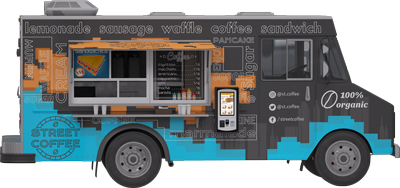
A self-ordering kiosk for food truck is a touchscreen device that allows customers to browse the menu, customize orders, and pay without interacting directly with staff.
Read too: Top Trucking Companies That Still Have Manual Transmissions
Unlike traditional POS systems that rely on cashiers, kiosks:
- Reduce manual order taking
- Minimize human error
- Speed up service during peak hours
These systems are commonly integrated with:
- POS software
- Kitchen display systems (KDS)
- Digital payment gateways
In short, a self-ordering kiosk turns your food truck into a high-efficiency, tech-enabled business.
Why Are Self-Ordering Kiosks Popular in Food Trucks?
Food trucks operate in tight spaces with limited manpower. Every second matters.
Recent industry data shows that digital self-ordering can increase average order value by 15–30%, mainly due to upselling prompts and visual menus.
Key reasons for adoption include:
- Faster order processing
- Shorter queues
- Higher customer satisfaction
- Better labor efficiency
For food truck owners, this means serving more customers in less time—without hiring extra staff.
How Does a Self-Ordering Kiosk Work in a Food Truck?
Step-by-Step Ordering Process
- Customer taps the screen to start ordering
- Menu categories appear with images and prices
- Customer customizes items (add-ons, spice level, sides)
- Payment is completed via card, mobile wallet, or QR code
- Order is sent directly to the kitchen display or POS
The entire process typically takes 30–60 seconds, compared to 2–3 minutes with manual ordering.
Key Benefits of Using a Self-Ordering Kiosk For Food Truck
1. Faster Service During Rush Hours
Kiosks allow multiple customers to order simultaneously, eliminating bottlenecks.
2. Improved Order Accuracy
Since customers enter their own orders, miscommunication is reduced significantly.
3. Higher Average Ticket Size
Upsell prompts like “Add fries for $2?” increase impulse purchases.
4. Lower Labor Costs
One kiosk can replace or support one cashier, saving hundreds of dollars monthly.
5. Better Customer Experience
Customers feel more in control and less rushed—especially introverted or first-time buyers.
Self-Ordering Kiosk vs Traditional Ordering: Comparison
| Feature | Self-Ordering Kiosk | Traditional Counter |
|---|---|---|
| Order speed | Very fast | Slower |
| Order accuracy | High | Medium |
| Staffing needs | Low | Higher |
| Upselling | Automated | Manual |
| Customer control | High | Limited |
Bottom line: kiosks outperform traditional ordering in high-volume food truck settings.
Is a Self-Ordering Kiosk Worth the Cost for Food Trucks?
Average Costs
| Item | Estimated Cost (USD) |
|---|---|
| Hardware (tablet/kiosk) | $800 – $2,500 |
| Software subscription | $50 – $150 / month |
| Installation & setup | $0 – $500 |
While the upfront investment may seem high, most food truck owners report ROI within 3–6 months due to increased throughput and reduced labor costs.
How a Self-Ordering Kiosk Increases Revenue
Built-in Upselling
Digital menus can:
- Suggest add-ons
- Highlight best sellers
- Display combo deals
Visual Menu Psychology
Customers are more likely to buy items when they see:
- High-quality food images
- Clear pricing
- Simple customization options
According to research on self-service technology (https://en.wikipedia.org/wiki/Self-service_technology), visual and interactive ordering significantly influences purchasing behavior.
Common Features to Look For in a Food Truck Kiosk
When choosing a self-ordering kiosk for food truck use, prioritize these features:
- Offline mode (critical for events with weak internet)
- Compact or wall-mounted design
- POS integration
- Multiple payment options
- Easy menu updates
Avoid overly complex systems that slow down customers or staff.
Installation Tips for Small Food Trucks
Step-by-Step Setup Guide
- Choose a compact kiosk or tablet stand
- Mount it securely near the service window
- Ensure power supply (110–120V standard US outlet)
- Connect to POS and payment gateway
- Test orders during off-hours
Tip: Keep screen brightness at 70–80% for outdoor visibility without overheating.
Challenges of Using Self-Ordering Kiosks (And Solutions)
Potential Drawbacks
- Initial cost
- Learning curve for first-time users
- Limited space inside trucks
Smart Solutions
- Start with one kiosk only
- Add simple on-screen instructions
- Offer staff assistance during peak hours
Most challenges disappear within the first few weeks of use.
Who Should Use a Self-Ordering Kiosk For Food Truck?
Self-ordering kiosks are ideal for:
- High-volume food trucks
- Event-based vendors
- Urban lunch crowds
- Festivals and night markets
If your truck regularly has lines longer than 5–7 customers, a kiosk is likely a smart investment.
FAQ: Self-Ordering Kiosk For Food Truck
What is a self-ordering kiosk for food trucks?
It is a touchscreen system that allows customers to place and pay for orders digitally without cashier interaction.
Can a food truck use a kiosk with limited space?
Yes. Many kiosks are compact, tablet-based, or wall-mounted specifically for small food trucks.
Do self-ordering kiosks work without internet?
Some systems offer offline mode, storing orders locally until the connection is restored.
How much does a self-ordering kiosk cost monthly?
Software subscriptions typically range from $50–$150 per month, depending on features.
Will customers actually use self-ordering kiosks?
Yes. Studies show customers prefer self-service for speed, privacy, and customization.
Conclusion
A Self-Ordering Kiosk For Food Truck is more than a trend—it’s a proven way to increase speed, accuracy, and revenue while reducing stress for both staff and customers. With proper setup and the right system, food truck owners can serve more people, make fewer mistakes, and grow profits faster.
If this guide helped you, share it with fellow food truck owners on social media—smart technology works best when everyone learns together 🚚📲
Leave a Reply