
The trucking industry is under intense pressure: rising fuel costs, driver shortages, safety concerns, and tighter delivery windows. AI in the Trucking Industry has emerged as a practical solution—not a futuristic concept, but a real tool already helping fleets operate smarter and safer. This article explains how AI is used today, why it matters, and how trucking businesses can benefit without being tech experts.
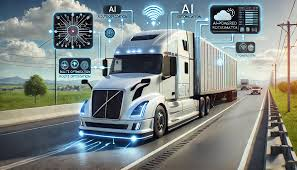
What Does AI in the Trucking Industry Mean?
AI (Artificial Intelligence) in trucking refers to software systems that analyze data, learn patterns, and make recommendations or decisions—often faster and more accurately than humans.
In practical terms, AI helps trucking companies:
- Predict maintenance issues before breakdowns happen
- Optimize routes to save fuel and time
- Improve driver safety using real-time monitoring
- Automate administrative and compliance tasks
Unlike full automation, most AI solutions support human drivers and dispatchers, rather than replace them.
Read too: Franklin Truck Parts Near Me: Your Complete Guide to Local Truck Parts & Repair Solutions
Why Is AI Important for the Trucking Industry Right Now?
The timing isn’t accidental. Several industry challenges are converging:
Key Industry Pressures
- Driver shortage: The American Trucking Associations estimates a shortage of over 80,000 drivers.
- Rising operating costs: Fuel, insurance, and maintenance continue to climb.
- Safety regulations: Increased scrutiny on hours-of-service and accident prevention.
- Customer expectations: Faster, more predictable delivery times.
AI addresses these pain points by reducing inefficiencies and human error, two of the biggest cost drivers in freight transport.
How Is AI Used in the Trucking Industry Today?
1. AI-Powered Fleet Management
Modern fleet management platforms use AI to process millions of data points from:
- GPS systems
- Engine sensors
- Driver behavior data
What AI does better than traditional software:
- Detects patterns humans miss
- Adjusts recommendations in real time
- Learns from past trips and outcomes
📊 McKinsey research suggests AI-driven optimization can reduce logistics costs by up to 15%.
2. Route Optimization and Fuel Efficiency
Fuel is one of the largest expenses for trucking companies.
AI-based routing systems analyze:
- Traffic patterns
- Weather conditions
- Road gradients
- Delivery priorities
Result:
- Shorter routes
- Less idle time
- Lower fuel consumption
Example:
A fleet running 50 trucks can save thousands of gallons of diesel per year by reducing even 5–7% of unnecessary mileage.
3. Predictive Maintenance: Fix Problems Before They Happen
Traditional maintenance is reactive—you fix things after they break.
AI changes this by predicting failures.
How It Works (Step-by-Step)
- Sensors collect engine, brake, and transmission data
- AI compares data to historical failure patterns
- System flags potential issues
- Maintenance is scheduled before breakdown
📌 Fleets using predictive maintenance report up to 30% reduction in unexpected downtime.
4. AI and Driver Safety Systems
Safety is one of the most impactful uses of AI in the trucking industry.
Common AI-powered safety features:
- Forward-collision warnings
- Lane-departure alerts
- Driver fatigue detection
- Real-time coaching feedback
These systems don’t spy on drivers—they provide objective data that helps drivers improve and protects them from unfair blame.
Is AI Replacing Truck Drivers?
Short answer: No.
Reality vs Myth
| Myth | Reality |
|---|---|
| AI will replace drivers | AI supports drivers |
| Autonomous trucks everywhere | Limited pilot programs |
| Jobs will disappear | Roles will evolve |
Fully autonomous trucks still face legal, technical, and ethical challenges, especially in complex urban and weather conditions.
Most experts agree AI will augment human drivers, not eliminate them—at least for the next 10–20 years.
Autonomous Trucks: How Close Are We Really?
Autonomous trucking gets a lot of headlines, but real-world deployment is gradual.
Current Status
- Mostly tested on highways
- Often require human safety drivers
- Limited to specific routes and conditions
For background on autonomous vehicle technology, see this overview on Wikipedia:
👉 https://en.wikipedia.org/wiki/Autonomous_car
📌 The near-term future is hybrid trucking, where AI handles predictable tasks and humans manage complexity.
Benefits of AI in the Trucking Industry
Advantages vs Challenges
| Benefits | Challenges |
|---|---|
| Lower operating costs | Initial setup cost |
| Improved safety | Training required |
| Better decision-making | Data quality matters |
| Reduced downtime | Integration complexity |
For most fleets, the long-term ROI outweighs the upfront investment.
How Small and Mid-Size Fleets Can Use AI
You don’t need a massive budget to benefit from AI.
Practical Entry Points
- Start with AI-powered dashcams
- Use route optimization software
- Implement predictive maintenance tools
- Analyze driver performance trends
💡 Many AI tools are now subscription-based, making them accessible to fleets with as few as 5–10 trucks.
AI and Compliance: Reducing Paperwork and Errors
AI also helps with:
- Hours-of-Service (HOS) compliance
- Electronic logging (ELDs)
- Automated reporting
This reduces administrative burden and lowers the risk of costly regulatory fines.
Common Mistakes When Adopting AI in Trucking
Avoid these pitfalls:
- ❌ Buying tools without clear goals
- ❌ Ignoring driver training
- ❌ Expecting instant results
- ❌ Poor data integration
AI works best when paired with good processes and realistic expectations.
FAQ: AI in the Trucking Industry
❓ Is AI expensive for trucking companies?
Costs vary, but many solutions start at affordable monthly rates. Savings often exceed costs within the first year.
❓ Does AI invade driver privacy?
Reputable systems focus on safety and performance, not surveillance. Transparency is key.
❓ Can AI really reduce accidents?
Yes. Fleets using AI safety systems report 20–40% reductions in accident rates.
❓ Do I need IT staff to use AI tools?
No. Most platforms are cloud-based and designed for non-technical users.
❓ Is AI only for large fleets?
Not anymore. Small and mid-size fleets increasingly benefit from AI-driven tools.
Conclusion
AI in the Trucking Industry is no longer optional—it’s becoming a competitive advantage. From improving safety and reducing costs to supporting drivers and simplifying compliance, AI helps trucking businesses work smarter without losing the human element.
🚛 If this guide helped you understand AI in trucking, share it with colleagues or fleet managers who are exploring smarter ways to operate.
Leave a Reply