
Starting a freight company can feel overwhelming, especially if you’re entering the industry for the first time. A solid Hot Shot Trucking Business Plan gives you clarity, reduces risk, and increases your chances of long-term profitability.
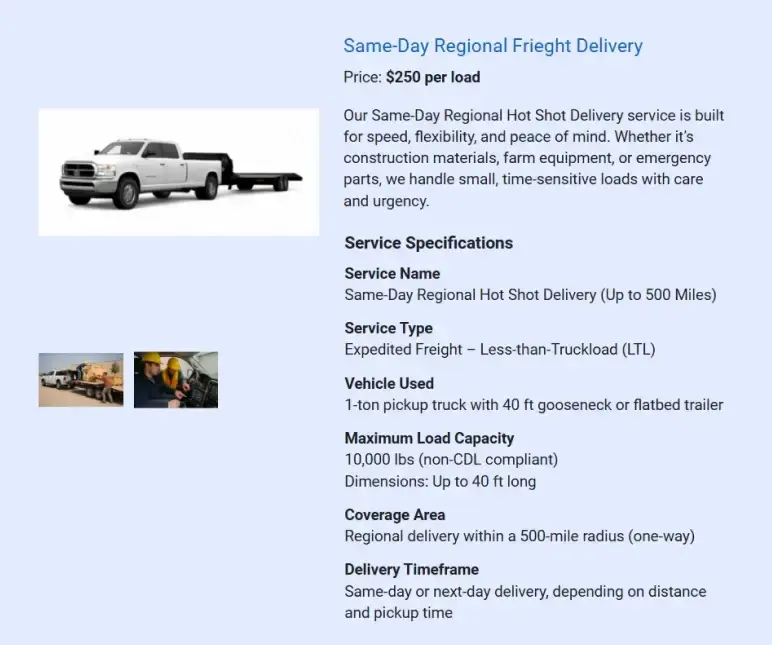
If you’re serious about launching a hot shot operation in the U.S., this guide walks you through everything — from legal setup to revenue projections — in a practical, beginner-friendly way.
Read too: Franklin Truck Parts Near Me: Your Complete Guide to Local Truck Parts & Repair Solutions
What Is a Hot Shot Trucking Business Plan?
A Hot Shot Trucking Business Plan is a structured roadmap that outlines how you will start, operate, and grow a hot shot freight company.
Hot shot trucking typically involves:
- Using a ¾-ton or 1-ton pickup truck
- Pulling a flatbed trailer
- Delivering time-sensitive LTL (less-than-truckload) freight
Hot shot freight is commonly used in:
- Oil & gas
- Construction
- Agriculture
- Manufacturing
For context, freight transportation plays a vital role in U.S. commerce (see: https://en.wikipedia.org/wiki/Freight_transport).
Why Do You Need a Business Plan for Hot Shot Trucking?
Many drivers jump in without planning. That often leads to:
- Underestimated costs
- Cash flow shortages
- Compliance issues
- Insurance problems
A strong plan helps you:
- Secure financing
- Calculate break-even points
- Reduce startup mistakes
- Improve long-term sustainability
According to small business research, businesses with written plans are 30% more likely to grow successfully in the first five years.
Step 1: Executive Summary (Your Business Overview)
Your executive summary should include:
- Business name
- Location
- Target market
- Services offered
- Revenue goals
- Funding needs
Example:
ABC Logistics LLC will provide expedited hot shot freight services in Texas and surrounding states, specializing in oilfield equipment and construction materials.
Keep it clear and concise — 1 to 2 pages max.
Step 2: Market Research – Is Hot Shot Trucking Profitable?
Before investing thousands of dollars, analyze your market.
Questions to Ask:
- Is there oilfield activity nearby?
- Are construction projects booming in your region?
- Who are your competitors?
- What are current per-mile rates?
Average Revenue Potential
Typical hot shot rates range:
- $1.50 to $3.00 per mile
- Emergency loads can exceed $4.00 per mile
If you average:
- 2,500 miles per week
- $2.25 per mile
That equals:
$5,625 weekly gross revenue
≈ $22,500 monthly before expenses
Step 3: Startup Costs Breakdown
Here’s what you should budget for.
| Expense Category | Estimated Cost |
|---|---|
| Truck (used) | $25,000–$60,000 |
| Trailer | $8,000–$20,000 |
| Insurance (annual) | $8,000–$18,000 |
| MC & DOT registration | $300–$500 |
| ELD device | $200–$800 |
| Maintenance reserve | $5,000+ |
| Misc. permits | $500–$1,500 |
Total startup range:
$50,000 to $100,000
Step 4: Legal Requirements & Compliance
Operating legally is critical.
Required Registrations:
- USDOT Number
- MC Authority (if crossing state lines)
- UCR Registration
- IFTA (if applicable)
- BOC-3 filing
If hauling over 10,000 lbs across state lines, you must comply with FMCSA regulations.
Failing compliance can result in heavy fines.
Step 5: Equipment Selection Strategy
Your truck and trailer setup defines your earning potential.
Recommended Truck:
- 1-ton dually (Ford F-350, Ram 3500, Chevy 3500)
- Diesel engine preferred
- Tow capacity 20,000+ lbs
Trailer Options:
| Type | Best For |
|---|---|
| Gooseneck | Heavy loads |
| Flatbed | Versatility |
| Lowboy | Equipment hauling |
Investing in quality equipment reduces downtime and repair costs.
Step 6: Insurance Planning
Insurance is one of your biggest expenses.
Required Coverage:
- $1,000,000 Auto Liability
- $100,000 Cargo Insurance
- Physical Damage Coverage
Expect monthly premiums of:
$700–$1,500 depending on driving history and location.
Step 7: Revenue & Profit Planning
Let’s break down monthly expenses.
Sample Monthly Operating Costs
| Expense | Estimated Amount |
|---|---|
| Fuel | $4,000 |
| Insurance | $1,000 |
| Maintenance | $800 |
| Loan Payment | $1,200 |
| Misc. | $500 |
Total Monthly Expenses: ≈ $7,500
If monthly gross is $22,500:
Estimated Net Before Taxes:
≈ $15,000
Realistic net after unexpected costs:
$8,000–$12,000
Step 8: Finding Loads
Popular Load Sources:
- Load boards (DAT, Truckstop)
- Direct shippers
- Freight brokers
- Oilfield contractors
Tip: Build relationships. Repeat customers increase stability.
Step 9: Operational Plan
Your business plan should outline:
- Service areas
- Work schedule
- Dispatch method
- Maintenance routine
Example Weekly Structure:
- 5 driving days
- 1 maintenance day
- 1 rest day
Preventive maintenance reduces breakdown costs by up to 40%.
Step 10: Risk Management
Hot shot trucking involves risks.
Key Risks:
- Fuel price spikes
- Mechanical breakdowns
- Freight rate drops
- Economic slowdowns
Mitigation strategies:
- Maintain emergency fund (3–6 months expenses)
- Diversify freight sectors
- Avoid over-leveraging equipment
Advantages vs Disadvantages of Hot Shot Trucking
Advantages
- Lower startup cost than semi-trucking
- Faster market entry
- High flexibility
- Potential strong profit margins
Disadvantages
- High insurance costs
- Physical workload
- Rate volatility
- Equipment wear
Sample 12-Month Growth Strategy
Months 1–3:
- Focus on learning load boards
- Build broker relationships
Months 4–6:
- Improve negotiation skills
- Increase per-mile rate
Months 7–12:
- Consider adding second truck
- Transition from broker loads to direct clients
Scaling too fast without cash flow planning can be risky.
FAQ: Hot Shot Trucking Business Plan
How much does it cost to start a hot shot trucking business?
Startup costs typically range between $50,000 and $100,000, depending on equipment and insurance.
Is hot shot trucking profitable in 2025?
Yes, if properly planned. Profitability depends on load rates, fuel costs, and operational efficiency.
Do I need a CDL for hot shot trucking?
Not always. If combined vehicle weight exceeds 26,001 lbs, a CDL is required.
How many miles do hot shot drivers drive per week?
Most average between 2,000 and 3,000 miles per week.
How long does it take to get authority?
Typically 3–6 weeks for full operating authority.
Can I start hot shot trucking part-time?
It’s possible, but insurance and fixed costs remain the same, so profitability may be limited.
Final Thoughts
A detailed Hot Shot Trucking Business Plan is not optional — it’s essential.
It helps you:
- Understand startup costs
- Plan realistic revenue
- Avoid compliance mistakes
- Build long-term profitability
The trucking industry offers strong opportunities, but only for those who treat it like a business — not just a driving job.
If you found this guide helpful, share it with aspiring owner-operators who are ready to build their own freight business.
Leave a Reply