
Tall trees near homes, power lines, or commercial buildings require specialized equipment to manage safely. That’s where Tree Service With Bucket Truck becomes essential. Instead of climbing unstable limbs, certified arborists use elevated platforms to trim or remove trees with precision and reduced risk.
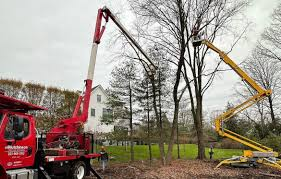
If you’re considering professional tree care, this guide explains how bucket truck services work, when they’re necessary, cost expectations, and safety advantages.
What Is Tree Service With Bucket Truck?
Tree Service With Bucket Truck refers to professional tree care performed using an aerial lift mounted on a truck. The lift raises a technician safely to high branches without relying solely on climbing gear.
Read too: Franklin Truck Parts Near Me: Your Complete Guide to Local Truck Parts & Repair Solutions
A bucket truck—also known as an aerial lift—allows arborists to reach heights of 40 to 100 feet depending on equipment. You can learn more about the equipment type under Wikipedia.
This method is widely used for:
- Tree trimming
- Tree removal
- Storm damage cleanup
- Utility line clearance
- Commercial property maintenance
When Is a Bucket Truck Necessary for Tree Service?
Not all tree jobs require heavy equipment. However, bucket trucks are ideal when:
- Trees exceed 30–40 feet
- Branches extend over rooftops
- Trees are near power lines
- Tree structure is unstable
- Commercial safety regulations apply
In urban areas, over 60% of large-tree removals involve aerial lift equipment due to safety regulations and efficiency standards.
How Does a Bucket Truck Improve Safety?
Safety is the top priority in professional arboriculture.
Key Safety Advantages:
- Reduced climbing risks
- Stable working platform
- Better visibility
- Controlled cutting angles
- Safer handling of large limbs
According to industry safety studies, falls from height are among the leading causes of tree service injuries. Aerial lifts significantly reduce this risk.
Step-by-Step Process: Tree Removal With Bucket Truck
Here’s how a professional tree removal typically works.
Step 1: Site Assessment
The crew evaluates:
- Tree height
- Lean direction
- Power line proximity
- Drop zone clearance
They determine if a bucket truck can access the site safely.
Step 2: Equipment Positioning
The truck is parked on stable ground. Outriggers are extended for balance.
Operators ensure:
- Level placement
- Safe distance from structures
- Clear cutting zones
Step 3: Elevated Cutting
The arborist enters the bucket and rises to cutting height.
Branches are removed in sections:
- Top canopy first
- Outer limbs
- Larger trunk sections
Each section is lowered safely using ropes if needed.
Step 4: Debris Removal
Wood is:
- Chipped
- Hauled away
- Cut into firewood (if requested)
Cleanup ensures property remains safe and tidy.
Tree Service With Bucket Truck vs Traditional Climbing
| Feature | Bucket Truck | Tree Climbing |
|---|---|---|
| Safety | Higher | Moderate |
| Speed | Faster | Slower |
| Cost | Slightly higher | Lower |
| Accessibility | Needs vehicle access | More flexible |
| Risk | Reduced fall risk | Higher fall risk |
While climbing is still common, bucket trucks are preferred for large or hazardous trees.
Average Cost of Tree Service With Bucket Truck
Costs depend on:
- Tree height
- Location
- Complexity
- Emergency status
Typical Price Ranges:
| Service Type | Average Cost |
|---|---|
| Tree trimming (40–60 ft) | $400–$800 |
| Tree removal (large tree) | $800–$2,500 |
| Emergency storm removal | $1,000–$3,000 |
Prices vary by region and urgency.
Benefits for Residential Properties
Homeowners benefit from:
- Faster project completion
- Reduced lawn damage
- Safer roof protection
- Controlled limb removal
For tall trees near homes, bucket trucks minimize accidental impact damage.
Benefits for Commercial Properties
Businesses often require:
- Insurance compliance
- Utility clearance
- Parking lot safety
- Liability reduction
Commercial contracts frequently specify aerial lift equipment for OSHA compliance.
What Trees Are Best Handled With a Bucket Truck?
Ideal for:
- Oak
- Pine
- Maple
- Palm (tall varieties)
- Dead or storm-damaged trees
Trees leaning toward structures are safer to remove from above rather than ground-level cutting.
Limitations of Bucket Truck Services
While effective, they require:
- Vehicle access to site
- Sufficient driveway width
- Stable ground surface
Narrow backyards may require crane or climbing alternatives.
Emergency Tree Service With Bucket Truck
After storms, damaged trees can:
- Hang over roofs
- Lean toward power lines
- Split at trunk
Emergency response teams use bucket trucks to stabilize and remove hazards quickly.
Fast response prevents additional property damage.
Insurance and Licensing Considerations
Always verify:
- Licensed arborist certification
- Liability insurance coverage
- Worker’s compensation
- Written estimate
Professional companies carry $1 million or more in liability coverage.
Environmental Considerations
Responsible companies:
- Recycle wood debris
- Offer mulch reuse
- Avoid unnecessary removals
- Provide tree health assessments
Sustainable tree management supports long-term property value.
Advantages vs Disadvantages
Advantages
- Improved safety
- Faster service
- Better access to tall trees
- Reduced manual strain
Disadvantages
- Slightly higher cost
- Requires driveway access
- Not suitable for all terrain
How to Choose the Right Tree Service Company
Look for:
- Certified arborists
- Positive customer reviews
- Detailed written estimates
- Transparent pricing
- Modern equipment
Avoid companies offering unusually low prices without proper credentials.
FAQ: Tree Service With Bucket Truck
1. Is a bucket truck safer than climbing?
Yes. It reduces fall risk and provides stable positioning.
2. Can bucket trucks reach over houses?
Yes, depending on boom length (typically 40–100 feet).
3. Does it damage driveways?
Outriggers distribute weight to minimize damage.
4. Is it more expensive?
Slightly higher than climbing, but often faster and safer.
5. Can it be used in small yards?
Only if there is vehicle access.
6. How long does tree removal take?
Most large removals take 3–6 hours depending on complexity.
Conclusion
Choosing Tree Service With Bucket Truck ensures safe, efficient, and professional management of tall or hazardous trees. Whether you need trimming near power lines or full removal after a storm, aerial lift equipment provides superior safety and precision.
Investing in professional tree service protects your home, your family, and your property value.
If this guide helped you understand bucket truck tree services, consider sharing it on social media to help others make informed decisions about safe tree care.
Leave a Reply