
Many truck drivers work hard every mile but still aren’t sure how much profit they actually make at the end of the month. Fuel costs, maintenance, insurance, and taxes add up quickly. A Profit And Loss Statement Template For Truck Drivers helps you clearly see where your money is going—and how much you’re really earning.
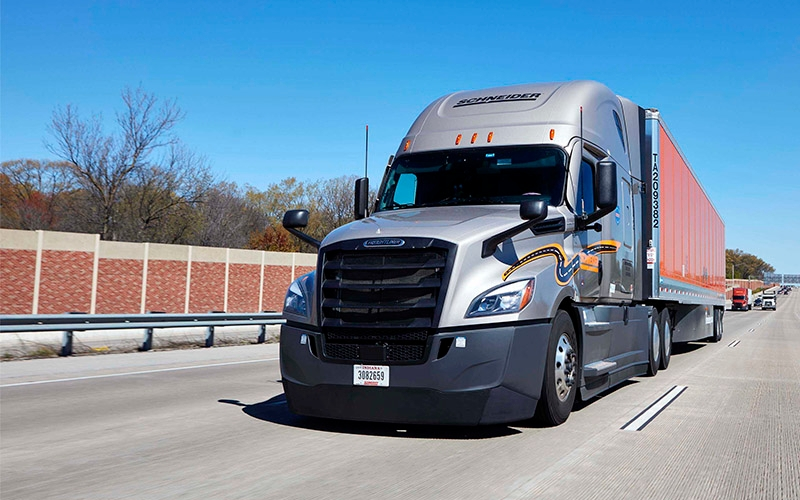
Whether you’re an owner-operator, lease operator, or independent contractor, a simple P&L statement can make the difference between running a truck and running a profitable business.
Read too: Franklin Truck Parts Near Me: Your Complete Guide to Local Truck Parts & Repair Solutions
What Is a Profit and Loss Statement?
A Profit and Loss (P&L) Statement is a financial report that summarizes:
- Income (money coming in)
- Expenses (money going out)
- Net profit or loss for a specific period
For truck drivers, this usually means tracking performance weekly, monthly, or annually.
In simple terms:
Income – Expenses = Profit (or Loss)
A P&L statement is also called an income statement and is one of the most important financial tools for any small business.
Why Truck Drivers Need a Profit and Loss Statement
Many drivers rely only on settlement sheets or bank balances, which can be misleading.
Key reasons to use a P&L template
- Understand true profitability per mile
- Control operating costs
- Prepare for tax season
- Qualify for loans or equipment financing
- Make smarter business decisions
- Identify unprofitable loads or lanes
Industry surveys show that drivers who track expenses regularly are far more likely to stay profitable long-term.
Who Should Use a Profit And Loss Statement Template?
A Profit And Loss Statement Template For Truck Drivers is useful for:
- Owner-operators
- Lease operators
- Independent contractors (1099)
- Small fleet owners
- New CDL drivers transitioning into ownership
If you pay your own fuel, maintenance, or insurance, you need a P&L.
What Goes Into a Truck Driver Profit and Loss Statement?
A trucking-specific P&L looks different from a standard small business statement.
Core sections
- Revenue (Income)
- Operating Expenses
- Net Profit or Loss
Let’s break these down.
Income Categories for Truck Drivers
This section shows all money earned during the period.
Common income items
- Linehaul pay
- Accessorial pay (detention, layover)
- Fuel surcharge
- Bonus pay
- Extra stop pay
- Owner-operator settlements
Tip: Always record gross income before deductions.
Expense Categories for Truck Drivers
Expenses are where profits are often lost.
Fixed expenses (monthly or predictable)
- Truck payment or lease
- Insurance (physical damage, liability, bobtail)
- Permits and licensing
- ELD subscription
- Accounting or dispatch services
Variable expenses (change with miles)
- Fuel
- Maintenance and repairs
- Tires
- Tolls
- Scales
- Truck washes
Driver-specific expenses
- Meals (per diem tracking)
- Lodging
- PPE and supplies
- Cell phone
- Internet
Tracking these accurately is critical.
Sample Profit And Loss Statement Template For Truck Drivers
Below is a simple monthly P&L structure you can use in Excel, Google Sheets, or bookkeeping software.
Example: Monthly P&L Template
| Category | Amount ($) |
|---|---|
| Income | |
| Linehaul Revenue | 18,500 |
| Fuel Surcharge | 2,200 |
| Other Pay | 300 |
| Total Income | 21,000 |
| Expenses | |
| Fuel | 7,200 |
| Maintenance & Repairs | 1,100 |
| Insurance | 950 |
| Truck Payment | 1,800 |
| Tolls & Scales | 350 |
| Meals & Lodging | 600 |
| Phone & ELD | 150 |
| Total Expenses | 12,250 |
| Net Profit | 8,750 |
This format makes profitability clear at a glance.
How to Create a Profit and Loss Statement Step by Step
You don’t need to be an accountant.
Step 1: Choose a time period
Most drivers use:
- Monthly (recommended)
- Quarterly
- Annual (for taxes)
Step 2: Gather income records
- Settlement statements
- Bank deposits
- Rate confirmations
Step 3: List all expenses
- Receipts
- Credit card statements
- Fuel reports
Step 4: Categorize expenses
Group costs consistently every month.
Step 5: Subtract expenses from income
This gives you your true profit.
How Often Should Truck Drivers Update Their P&L?
Best practice:
- Weekly: Fuel and variable expenses
- Monthly: Full P&L review
- Annually: Tax and planning purposes
Drivers who review their P&L monthly are better at catching profit leaks early.
Profit and Loss vs Settlement Sheets
Many drivers confuse the two.
Key differences
| Settlement Sheet | P&L Statement |
|---|---|
| Shows carrier pay | Shows full business performance |
| Doesn’t include all expenses | Includes every cost |
| Short-term view | Long-term profitability |
| Not tax-ready | Tax-friendly |
A settlement sheet is not a profit and loss statement.
Common Mistakes Truck Drivers Make With P&L Statements
Avoid these costly errors:
- Forgetting small expenses
- Mixing personal and business spending
- Ignoring per-mile costs
- Only tracking income
- Waiting until tax season
Even small untracked expenses can add up to thousands per year.
How a P&L Helps With Taxes
A clean P&L makes tax filing easier and safer.
Tax benefits
- Accurate deductions
- Proof during audits
- Better communication with CPAs
- Reduced tax stress
Understanding basic accounting concepts helps—see this overview:
👉 https://en.wikipedia.org/wiki/Income_statement
(only one authoritative external link included, as requested)
Using a P&L to Improve Profit Per Mile
A major advantage of a Profit And Loss Statement Template For Truck Drivers is identifying cost per mile.
Example
- Monthly miles: 10,000
- Total expenses: $12,000
- Cost per mile: $1.20
If you’re earning $2.20 per mile, your profit is $1.00 per mile.
This insight helps with:
- Load selection
- Rate negotiations
- Fuel strategy
Tools to Use With Your P&L Template
You can manage your P&L using:
- Excel or Google Sheets
- Accounting software
- Trucking-specific bookkeeping tools
- Professional bookkeepers
For beginners, spreadsheets are often the simplest and most effective option.
Monthly vs Annual Profit and Loss Statements
Monthly P&L
- Best for decision-making
- Easier to fix problems quickly
Annual P&L
- Best for taxes
- Shows big-picture trends
Smart drivers use both.
Who Reviews Your P&L Statement?
Your P&L may be reviewed by:
- You (most important)
- Accountants or tax preparers
- Lenders and banks
- Leasing companies
- Potential business partners
A clean, organized P&L builds financial credibility.
Advantages and Disadvantages of Using a P&L Template
Advantages
✔ Clear financial visibility
✔ Better cost control
✔ Easier tax preparation
✔ Stronger business decisions
✔ Reduced financial stress
Disadvantages
✖ Requires discipline
✖ Takes time initially
✖ Needs consistent updates
The benefits far outweigh the effort.
FAQ: Profit And Loss Statement Template For Truck Drivers
Do truck drivers really need a profit and loss statement?
Yes. If you pay business expenses, a P&L is essential for understanding real profit.
How often should I update my P&L?
Monthly is ideal. Weekly expense tracking makes it easier.
Can I use Excel for my trucking P&L?
Absolutely. Excel and Google Sheets work well for most drivers.
Is a P&L required for taxes?
Not required by law, but highly recommended and often requested by CPAs.
Should I track per diem on my P&L?
Yes. Even if not reimbursed, it impacts your tax planning.
What’s the biggest mistake drivers make with P&L statements?
Only tracking income and ignoring expenses.
Conclusion
A Profit And Loss Statement Template For Truck Drivers is one of the most powerful tools you can use to take control of your trucking business. It shows you the truth behind your miles, rates, and expenses—and helps turn hard work into real profit.
If you want to grow, scale, or simply keep more of what you earn, a clear P&L is not optional—it’s essential.
Leave a Reply